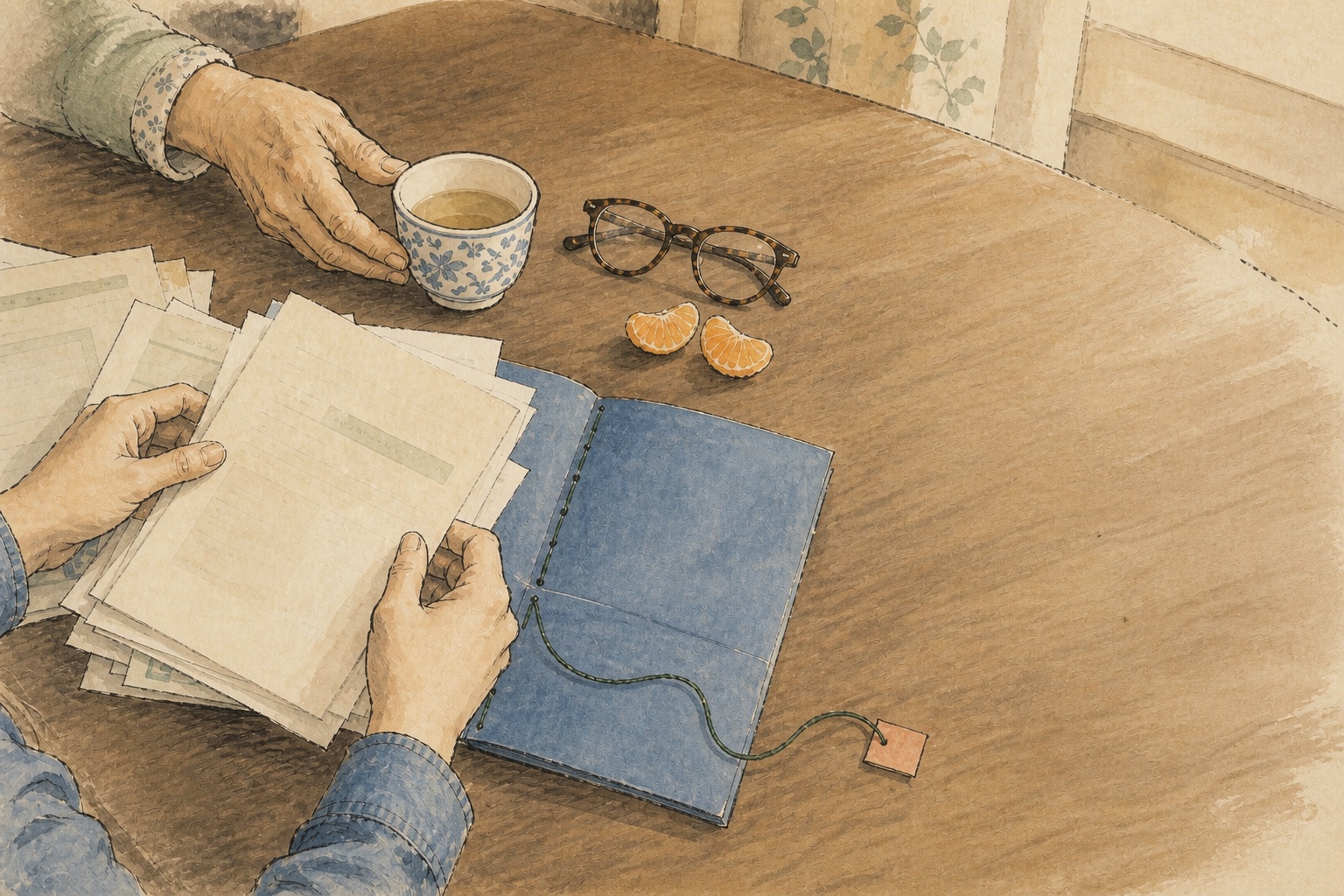

A daughter and her father review a calendar together at their kitchen table

A California pilot

You already spend hours managing Mom or Dad's healthcare. Some of those hours should be paid.

We are building a pilot where a clinician would assign healthcare follow-up and Kin Hours would hire a family member to do it.

Tell us about your family

Two minutes. Research only, not a job application.

Where the hours go

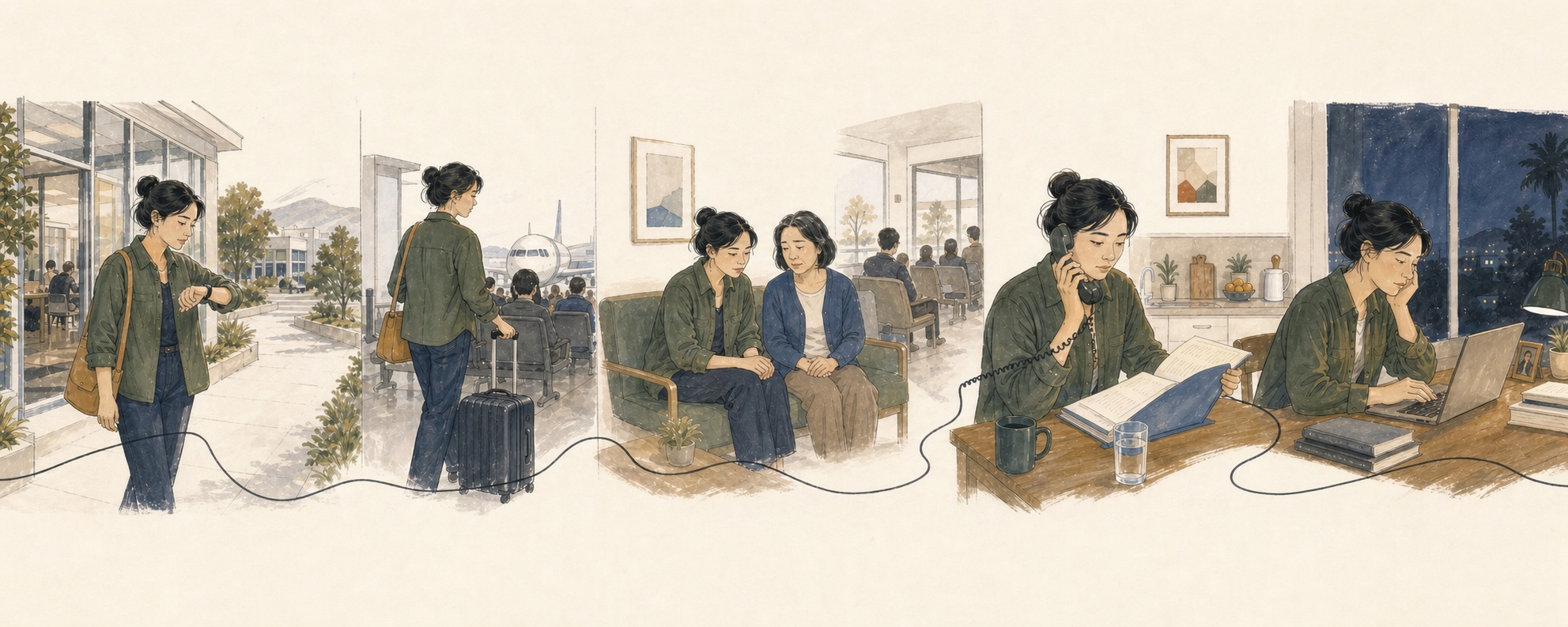
She flew to Los Angeles once a month for one appointment.

A daughter leaving work, flying to her mother's appointment, making follow-up calls, and returning to work late at night
Leave workFly to L.A.Sit beside MomCall againCatch up at night

Her mother spoke English and could get to the doctor on her own. That was not the problem. When the cancer news changed, it was hard to take in alone.

Once a month, her daughter flew from Silicon Valley to Los Angeles for the appointment, then flew back to work. Her company gave her one remote day.

After a year of feeling “half in, half out,” she moved home. The work had simply become hers.

Story shortened and anonymized from a family interview.

What family care can look like

Which part sounds familiar?

These are examples. Your family may look different.

Tell us about your family

Going with them

The appointment is 30 minutes. The day is not.

You drive, wait, listen, take notes, bring them home, and call the office afterward.

A ride does not translate the visit or ask the follow-up question.

Living far away

You do it from another city.

You book appointments and call offices from another city. Sometimes you travel in. Sometimes you coordinate with whoever can be there.

You still need to know what the doctor said, even when someone else provides the ride.

Memory and safety

Someone has to stay close now.

A parent may forget the plan, miss a dose, or wander outside while you are working.

One manager told us about an employee who left a video call when her father with Alzheimer's wandered outside.

Language and records

You keep the medical story straight.

The records sit in different portals, offices, or countries. You know what changed and what is still missing.

Sometimes translation means knowing the context, not just the words.

After a hospital stay

The hospital says Mom can come home Friday.

The discharge date arrives before the equipment, ride, follow-up, or home help is settled.

Someone has to find the equipment, confirm the prescriptions, book follow-up, and make the house work.

How the pilot would work

Your parent is assessed. You apply for the job.

For your parent

A clinician sees your parent.

Your parent agrees to a visit. The clinician decides whether they need ongoing follow-up.

For you

You apply separately.

Kin Hours interviews and trains you. Your parent's care plan does not guarantee you a job.

The clinical practice would bill insurance. Kin Hours would pay your wage. The first pilot would cover clinician-assigned follow-up, not hands-on care, errands, or work already done.

30-minute interviews

Tell us about your family.

Tell us what you handle for a parent or relative. If the pilot opens, we will start with families from these interviews.

Please leave out diagnoses, Medicare numbers, medication names, and medical records.

01

Your week

What takes the most time right now?
02

Your family

03

How to reach you

Privacy

Questions

Am I applying for a job?

No. This puts you on the list for a research interview and the first pilot. Hiring would have a separate application.

Would Medicare pay me?

No. If you were hired, Kin Hours would pay your wage. The clinical practice would bill insurance separately.

How much could I make?

We have not set the wage or hours. You would see both before accepting a job.

Does my parent need to agree?

Yes. Your parent would need to agree to the clinical service and to your involvement. They can keep their regular doctors.